Posts

Stepping Stones

Image
Today we'll look at some puzzles based on Neil Sloane's presentation of the stepping stones puzzle, given in this Numberphile video .

More on Designer Dice

Image
Here are some more thoughts on implementing the dice activity in the previous post.

Designer Dice

Image
In this activity, students will design dice with the aim of beating other dice in a rolling face-off.

Arithmetic Twister

Image
Here we'll look at a physical activity in the vein of the four fours puzzle or 24 game.

Knot Theory Puzzles

Image
At the Joint Math Meetings, some folks from the VCU Breakthroughs team presented some activities on knots using a silicone necklace manipulative. Today we'll look at a set of puzzles inspired by that.

Group Theory Puzzles

Image
In this post, we'll look at some puzzles based on the presentations of finite groups that students will approach as a puzzle of turning one string into another according to some rule set.

Polyhedron Puzzles

Image
As summer approaches, JRMF's plan is to develop a slew of activities to test in the fall. To that end, I'll be trying to post activities more frequently but with less of a mathematical dive. Today we'll look at some puzzles involving making polyhedra from a set of faces.

Sums of Squares

Image
Today we'll look at an activity that explores different aspects of expressing a positive integer as a sum of squares.

Nanobot Factory

Image
I've been toying with some potential activities that involve division. Today we'll look at an activity that makes heavy use of division and partitions, skinned as a factory trying to make as many nanobots as possible.

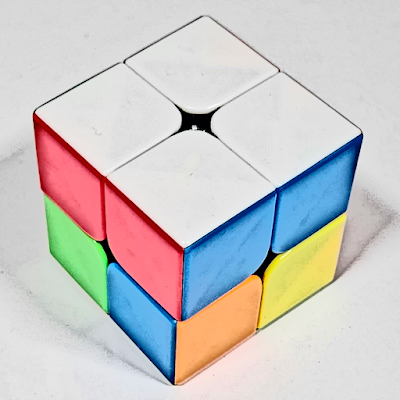
The Pocket Cube

Image
Rubik's cubes have a strange place in our pop culture as artifacts that only geniuses can solve, but the many guides on solving them have made solution techniques pretty accessible to a wide audience. Mathematicians like them because they provide a shiny introduction to group theory that leave students with a neat party trick. Today we'll look at the "pocket cube" (the 2x2x2 version, typically abbreviated 2x2), which I've had good luck introducing to beginners.