When I was a grad student, I used to keep a basket of burr puzzles on my coffee table for guests to fiddle with. Today we'll look at an activity where students design them before solving them!
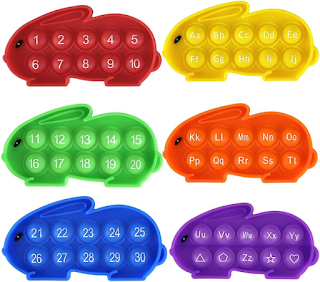
I first encountered the locker problem at a math competition in high school. JRMF used to have a version of it on the books called Lightbulbs , but it was retired because it was too app-dependent. Today we'll look at some manipulatives and sequences for a hands-on, in-person version.
I first encountered Numberlink puzzles in the (numberless) Flow Free app and appreciated them because they were a little more topological than the typical logic puzzle.
Daniel Kline has been playing around with an in-person version of Panning for Gold and was wondering what other puzzle variants could be done on a balance scale. This post is an attempt to answer that question!
I've run packing activities before on gridded paper. While it was passable, there were usually a lot of questions about whether objects were successfully packed or peeking out over the line. Here we'll look at an arts and crafts project that serves as a preamble to exploring packing problems.
I volunteered at an event for SUMM the other week where students were putting together different three-dimensional shapes (polyhedra, cylinders, cones, etc) from paper nets . Seeing kids building cones reminded me of sphericons. I hadn't designed a sphericon net before and thought it might make for a fun, slightly-more-advanced build.
I was looking through some open problems in arithmetic combinatorics earlier this week and thought some of the problems that revolve around avoiding arithmetic sequences might make nice puzzles. We'll look at a few variants.